In the modern telecommunications landscape, the demand for "Triple Play" services—voice, high-speed data, and high-definition video—has pushed fiber optic infrastructure to its limits. To meet this demand without massive fiber cable overhauls, the integration of EDFA (Erbium-Doped Fiber Amplifier) with WDM PON (Wavelength Division Multiplexing Passive Optical Network) has become a game-changing solution.
The Role of EDFA and WDM PON in Modern Networks
Triple Play services require immense bandwidth and consistent signal quality. While traditional PON systems are excellent for data, the delivery of analog or digital CATV signals often suffers from attenuation over long distances.
This is where the EDFA WDM PON comes into play. By combining high-power optical amplification (EDFA) with wavelength division (WDM), operators can "piggyback" video signals onto the same fiber used for internet data.
Key Benefits of Integration:
Wavelength Optimization: Data travels on 1310nm/1490nm, while CATV video is carried on the 1550nm wavelength.
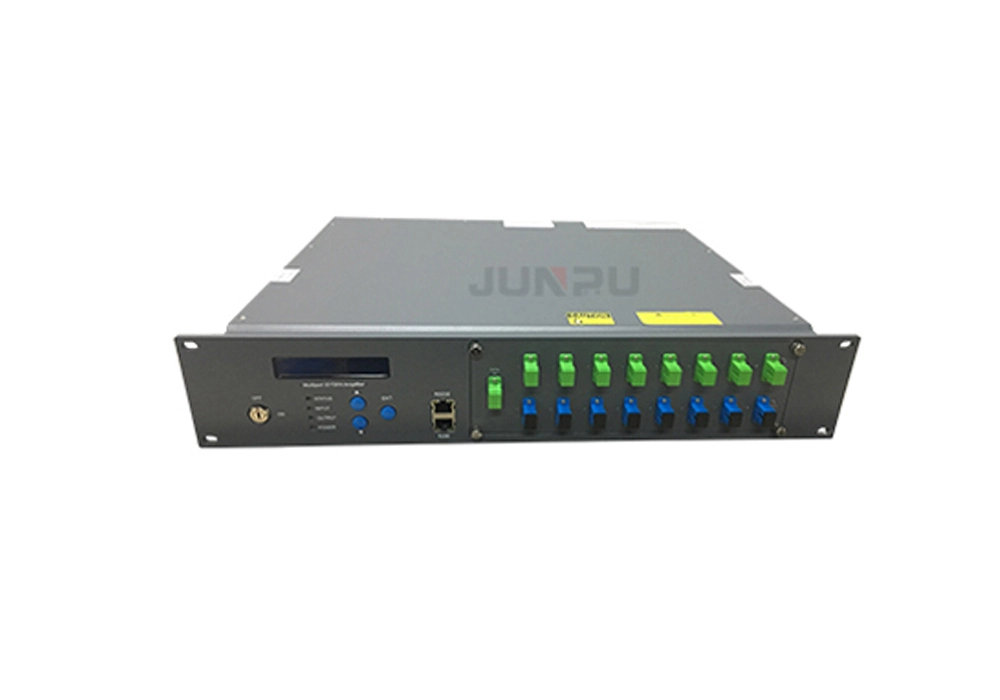
High Power Efficiency: A single EDFA WDM PON unit can amplify the 1550nm signal and combine it with multiple OLT PON ports, serving thousands of subscribers from one rack.
Infrastructure Savings: Reduces the need for additional fiber strands by maximizing the capacity of existing cables.
How It Boosts Bandwidth & Efficiency
1. Seamless Spectrum Management
Using Passive WDM technology, the system ensures that high-speed broadband and video signals do not interfere with each other. This clear separation allows for a smoother upgrade path to XGS-PON without replacing the underlying 1550nm optical transmitters.
2. High-Density Port Configuration
Modern integrated devices, such as the JP3220EAP series, offer up to 32 or 64 output ports. This density is crucial for metropolitan areas where space in the central office is at a premium.
3. Reliability and Signal Integrity
EDFAs provide the necessary gain to overcome splitting losses in high-ratio PON networks (e.g., 1:64 or 1:128). This ensures that even the furthest subscriber receives a crisp, lag-free signal for their Triple Play services.
Technical Specifications: A Quick Look
Parameter | Specification | Why it Matters |
Operating Wavelength | 1540~1563nm | Optimized for CATV & WDM |
Input PON Ports | 8, 16, or 32 | Compatible with various OLTs |
Output Power | Up to 40dBm | Ensures long-reach capability |
Fiber Compatibility | G.652 & G.657 | Standard for fiber optical solutions |
Best Practices for Deployment
To maximize the efficiency of an EDFA WDM PON system:
Climate Control: While the units are robust, maintaining stable temperatures in the hub site prolongs the life of the pump lasers.
Connector Hygiene: Use high-quality connectors and ensure they are cleaned to prevent back-reflections that can damage high-power EDFAs.
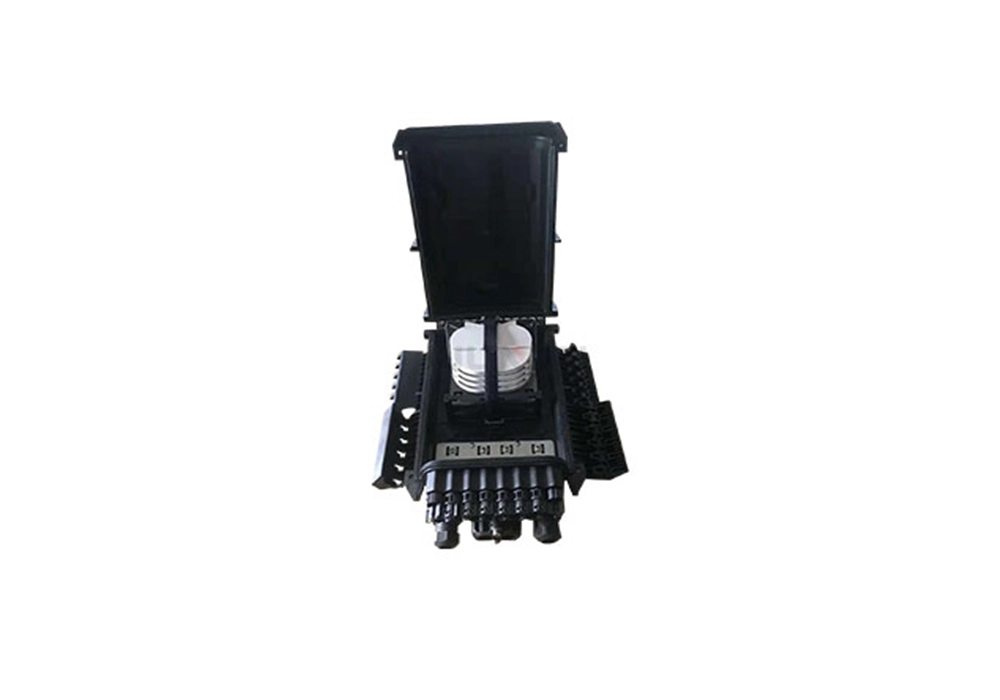
Outdoor Protection: For nodes located outside the central office, always utilize IP66-rated enclosures to protect against moisture and dust.
Conclusion
The integration of EDFA and WDM PON technology is the most efficient way to deliver high-bandwidth Triple Play services today. By understanding the core components of a fiber optic communication system, network engineers can build scalable, high-performance architectures that meet the needs of tomorrow's users.
FAQ: EDFA WDM PON Integration
Q1: Why is 1550nm the preferred wavelength for EDFA?
The 1550nm wavelength falls within the "C-band," where silica fiber has the lowest attenuation. This makes it ideal for amplification by Erbium-doped fibers, allowing for long-distance transmission with minimal signal loss.
Q2: Can EDFA WDM PON support XGS-PON?
Yes. Integrated WDM filters in modern EDFAs are designed to pass through 1270nm and 1577nm wavelengths used in XGS-PON, making your network future-proof for 10G speeds.
Q3: How many users can one EDFA WDM PON unit support?
Depending on the number of output ports (e.g., 32 ports) and the split ratio (e.g., 1:64), a single high-power unit can potentially serve over 2,000 subscribers for video and data services.
Q4: What is the primary advantage of integrated WDM in an EDFA?
Integration reduces the number of patch cords and external couplers needed. This simplifies the rack wiring, reduces total insertion loss, and minimizes potential points of failure in the network.

 English
  日本語
日本語  Deutsch
  italiano
  العربية
  Polska
  Ελλάδα
  română
  slovenský
  Suomi
Suomi  Nederland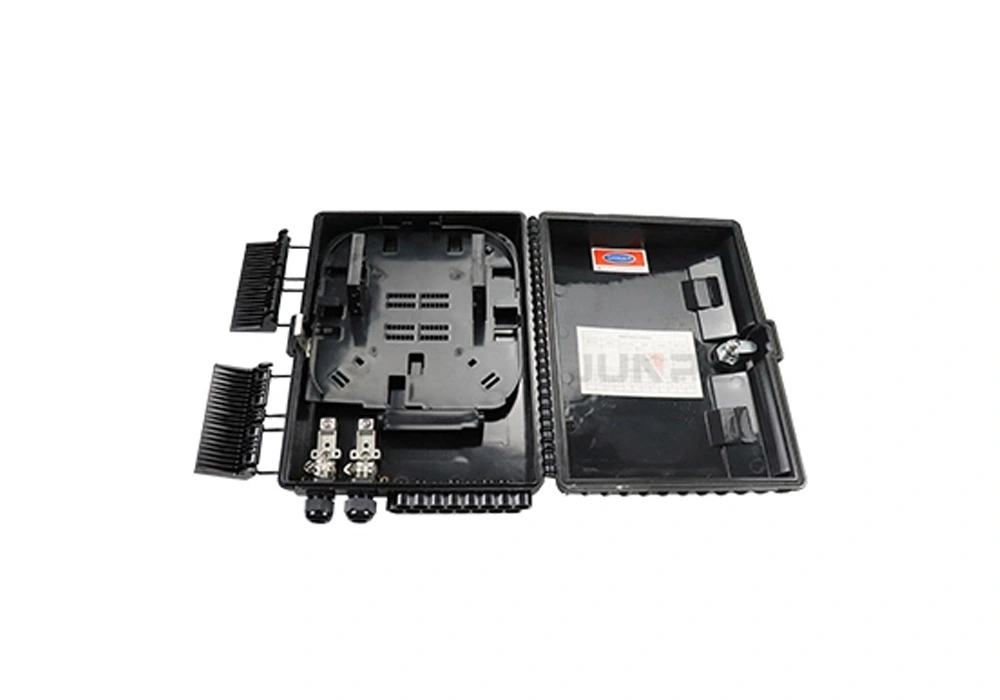




 Call us on:
  Email Us:
  Wanhua Science and Technology Park, No. 528, Shunfeng Road, Donghu Street, Linping District, Hangzhou City, Zhejiang Province