Significance of Polarity Testing
MPO connectors include multi-core structures with 12, 24, and 48 cores. Unlike the single-core LC/SC fiber with its single optical path, multi-core fibers have a strict core sequence correspondence. Under normal operating conditions, the Nth core at one end of the fiber must correspond to the specified core number at the other end according to the standard to achieve optical path matching. If the polarity is misaligned or the cores are misplaced, it will cause high-speed optical modules to have no light, link degradation, and data transmission interruption. Therefore, polarity testing is a mandatory inspection procedure for MPO patch cords.
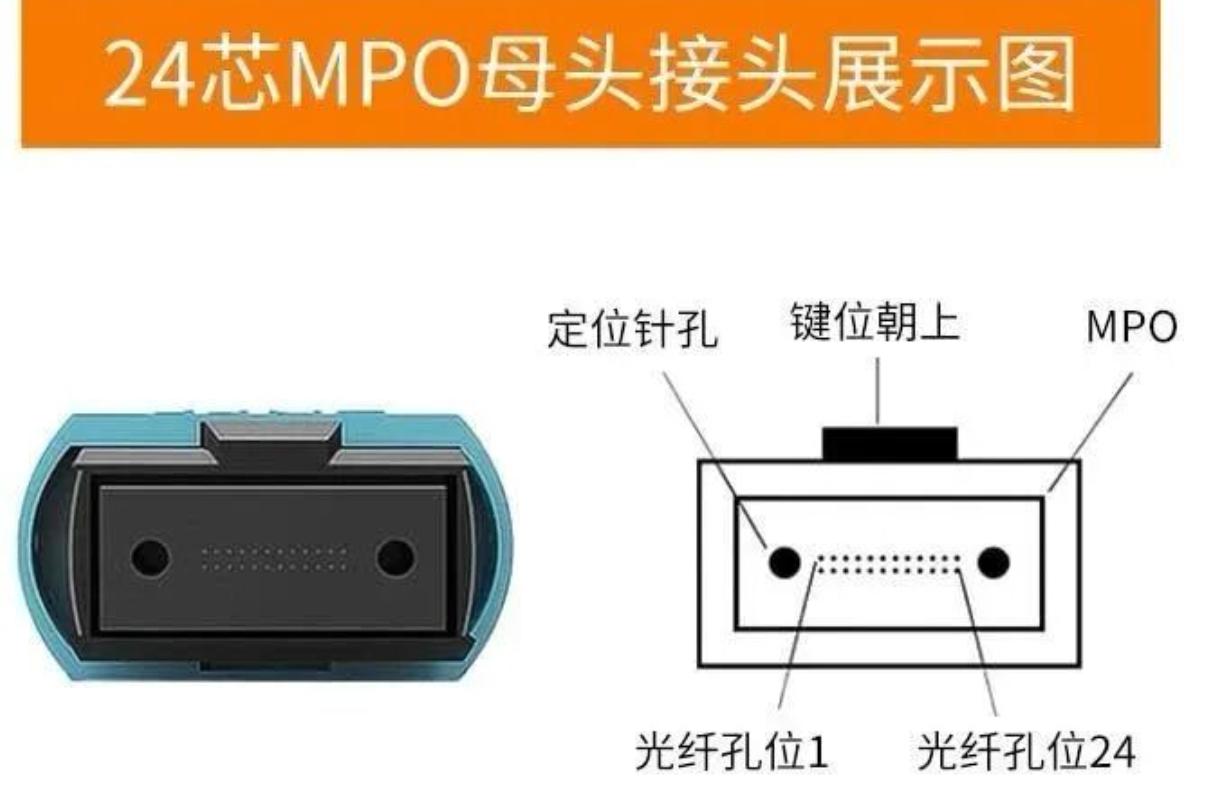
Three Major Standard Polarity Types in the Industry
The industry-standard TIA-568 defines three MPO polarity modes: A, B, and C, to adapt to different cabling scenarios and serve as the core criterion for polarity testing: 1. Type A Polarity (Straight-through): Connector keys at both ends are aligned vertically, and fiber core numbers correspond one-to-one (fiber 1 to fiber 1, fiber 2 to fiber 2), with no flipping throughout. This type is primarily used for backbone cabling. 2. Type B Polarity (Flipped): Connector keys at both ends are aligned vertically, but fiber core numbers are reversed. Fiber 1 on one end corresponds to the highest fiber number on the other, and fiber 2 corresponds to the second highest fiber number. This type is commonly used for patch cord connections at device ports. 3. Type C Polarity (Odd/Even Flipped): Key arrangement is the same as Type A, but adjacent fiber cores inside the cable flip in pairs (1↔2, 3↔4 interchanged sequentially). This type is mainly suitable for full-duplex parallel transmission scenarios.
Mainstream MPO polarity practical testing methods
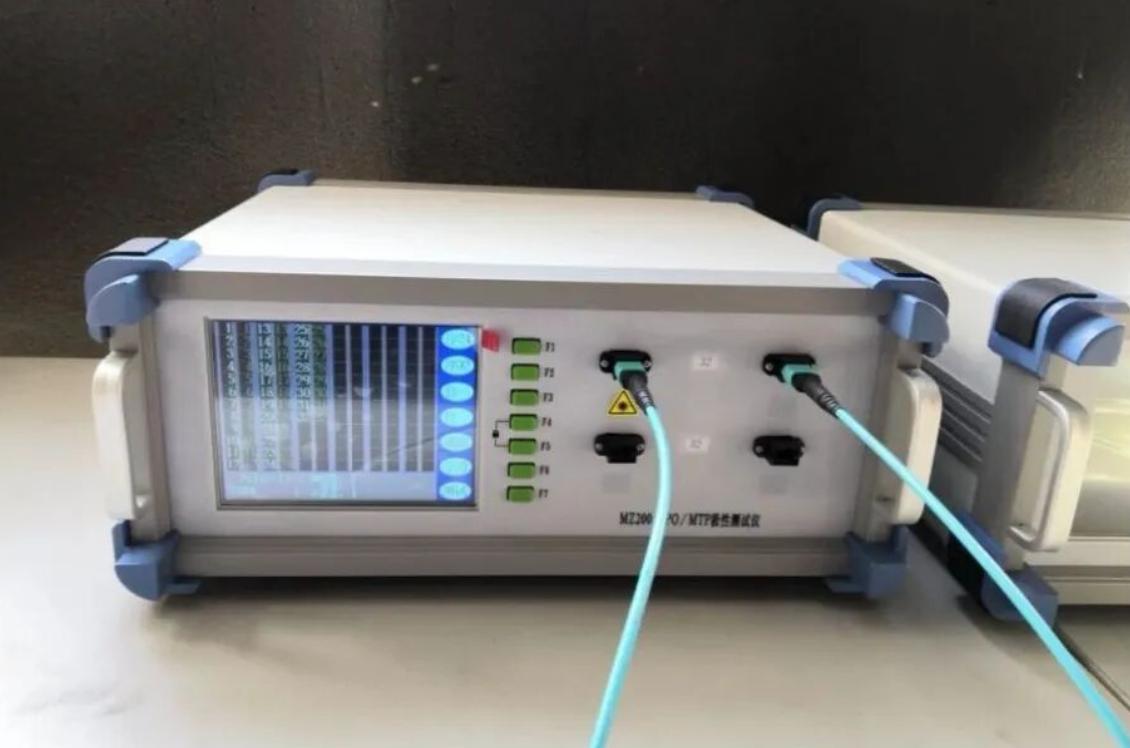
Currently, two common methods used in engineering are the automatic testing method using dedicated testing instruments (mainstream and efficient) and the manual core-by-core testing method using light sources (precise troubleshooting), which are suitable for different scenarios such as batch acceptance and fault location.
Summarize
The core of MPO polarity testing is to verify fiber core sequence, match standard polarity, and ensure corresponding optical path transmission and reception. Automated testing methods are efficiently adapted for batch acceptance testing, while manual core-by-core testing is accurately adapted for fault diagnosis. Combining these two methods can cover most engineering scenarios. In high-speed data center cabling projects, strictly adhering to A/B/C polarity standards, standardizing testing procedures, and accurately diagnosing polarity faults can effectively avoid network failures caused by polarity errors, ensuring the transmission stability and reliability of high-speed fiber optic links above 40G.

 English
  日本語
日本語  Deutsch
  italiano
  العربية
  Polska
  Ελλάδα
  română
  slovenský
  Suomi
Suomi  Nederland






 Call us on:
  Email Us:
  Wanhua Science and Technology Park, No. 528, Shunfeng Road, Donghu Street, Linping District, Hangzhou City, Zhejiang Province