Fiber Optical Splice Closure is widely used in fiber optical communication network construction. JUNPU Tech has full experience in the fiber optical splice closure field and can help your company build a local stable internet service project. Fiber optic splice box, also known as a fiber optic splice box or fiber optic distribution box, is a device specifically used for fiber optic connection and fiber optic distribution management. It is usually made of plastic or metal materials and has multiple fiber optic interfaces, which can be divided into two types of fiber optic joint closures: outdoor and indoor. The following is an introduction to the types of Outdoor Fiber Splice Enclosure and the functions of Fiber Optic Splice Closure.
What is the Fiber Optic Splice Closure?
The Fiber Optic Splice Closure is an open-type mechanical pressure sealing joint system, which is widely used in the continuation of fiber optic communication optical cables.
Features:
Repeatable use.
The plastic parts of the product are made of high-quality engineering plastics, and a stronger agent injection molding is added. External fasteners and structures are made of high-quality stainless steel materials.
The inside splice tray adopts a superposition structure to configure flexible configuration.
Use secondary cable technology to ensure that the fiber in the box has no additional decay.
The electrical connection of the inlet and out of the optical cable can be broken.
Perform seal measures and excellent performance.
Have multiple reuse and capacity expansion functions.
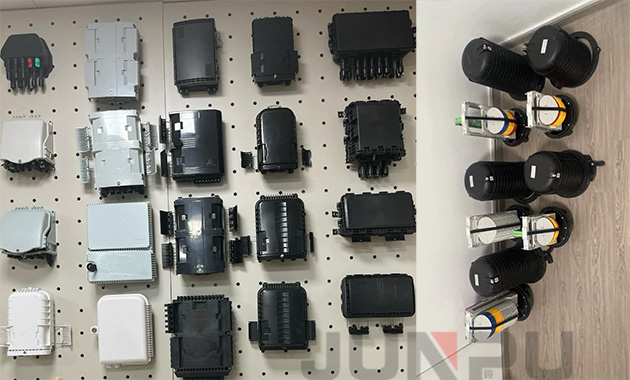
Common Types of Fiber Optic Joint Box (Splice Enclosure)
The type of Fiber Optic Splice Closure can be divided into two types: Dome optical cable splice closure and horizontal optical cable enclosure. According to the laying method of optical cables, it can be divided into types such as overhead, pipelines, and buried. According to the sealing method, there is a heat shrinkage seal type and a mechanical sealing type.
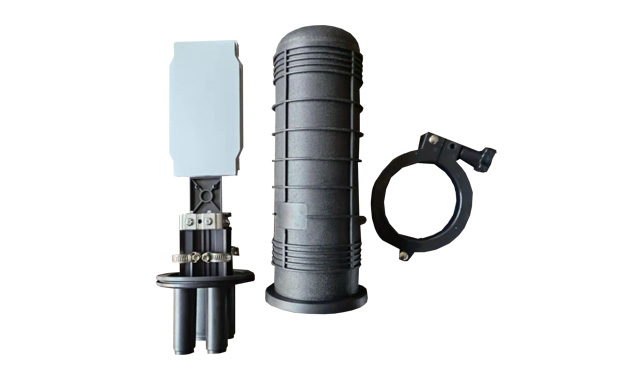
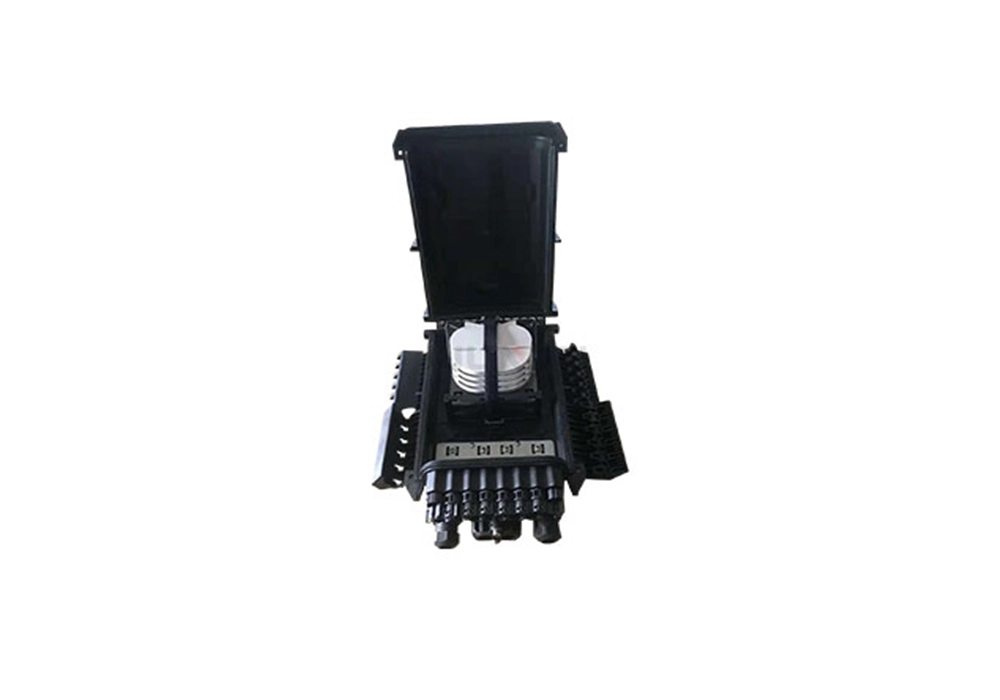
Dome fiber optical cable splice closure
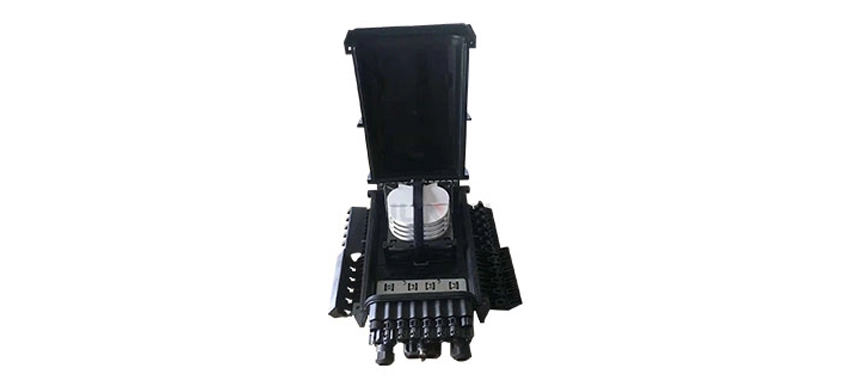
Dome fiber optical cable splice closures are usually installed on walls or overhead areas, and the installation method is relatively flexible. The shape is mostly rectangular or cubic, and there is also a protective cap on the outside, which can effectively protect the joint. Suitable for the continuation, conversion, and distribution of indoor and outdoor optical cables.
Horizontal fiber optical cable enclosure
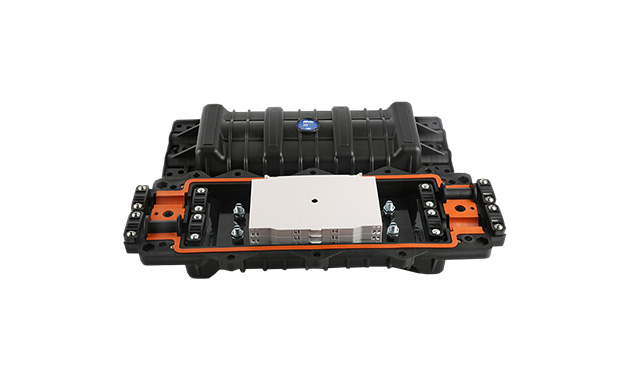
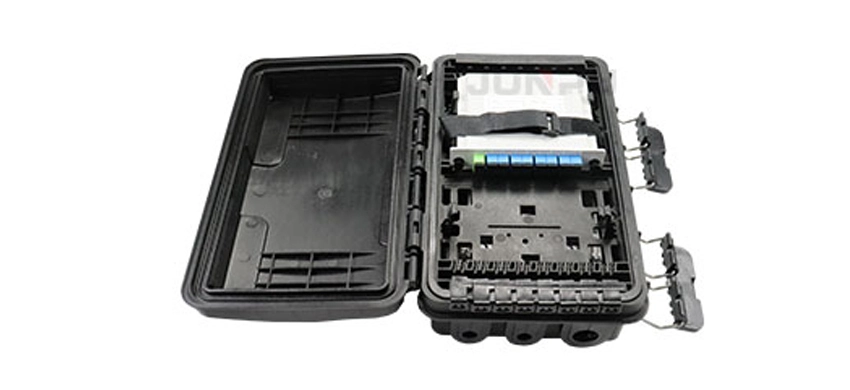
Horizontal fiber optical cable enclosures are usually installed on the ground or tabletop for use, and the installation method is relatively fixed. It is usually long or cylindrical, with a relatively small volume. The horizontal fiber optic enclosure is suitable for the transfer with the user at the terminal access, commonly in home broadband networks and corporate data centers.
Dome vs. Horizontal Fiber Optic Splice Closure: How to Choose?
When selecting a fiber optic joint box, the most common decision is between Dome (Vertical) and Horizontal (Inline) types. Understanding their structural differences is key to ensuring long-term network stability.
| Feature | Dome (Vertical) Closure | Horizontal (Inline) Closure |
| Physical Shape | Cylinder-shaped with a protective dome cap. | Flat, rectangular, or cylindrical "bread" shape. |
| Mounting Options | Pole-mounting, Wall-mounting, and Manhole. | Aerial (hanging), Underground (buried), and Wall. |
| Cable Entry Port | All ports are at the bottom (One-ended). | Ports are located at both ends (Two-ended). |
| Sealing Method | Primarily Heat-shrink or Mechanical (O-ring). | Primarily Bolt-tightened Mechanical or Gel sealing. |
| Best Application | Ideal for branching and high-capacity distribution. | Best for straight-through (linear) splicing. |
| Waterproof Level | Excellent performance for harsh environments. | High versatility for FTTx access points. |
Why Choose Dome Type?
The Dome Fiber Optic Splice Closure is often preferred for vertical installations. Because all cable entry ports are on one side, it provides superior protection against water ingress in manhole applications. It is the go-to choice for backbone network branching where multiple fiber cables need to be managed in a compact space.
Why Choose Horizontal Type?
The Horizontal Fiber Optic Enclosure is designed for linear connectivity. Its "in-and-out" structure at both ends makes it perfect for connecting two cables in a straight line, commonly seen in aerial fiber deployments or home broadband access points. It is generally easier to access for maintenance and re-entry.
What is the function of Fiber Optic Splice Closure?
The main role of an optical cable connector is to connect the two optical cables so that the optical signal can be transmitted normally. Through the medium transparency of the optical cable connector, the optical signal can be passed through different optical cables to achieve connecting between the optical cables.
The optical cable connector can also be used to allocate optical fiber signals and distribute the signal of an optical cable to multiple optical cables to realize the flexible wiring and management of the optical cable.
The maintenance and protection of optical cables are very important during the laying and use of optical cables. In addition to connecting and distributing optical cable signals, optical cable connectors can also be used to protect optical cables and prevent optical cables from being damaged or damaged.
The fiber optic splice closure plays an important role in the optical cable system. It can ensure the stability and reliability of the network, deal with line failures, and improve the quality and speed of network transmission. Therefore, in the optical cable system, the quality and performance of optical cable joint boxes are very important. When selecting and installing the optical cable connector, pay attention to the matching and compatibility of the optical cable, and install and debug in accordance with the specifications and standards.
The optical cable connector is an indispensable and important part of the optical cable system. It has the function of connecting optical cables, distributing optical fiber and protecting optical cables. Its role directly affects the quality and stability of the network transmission. In practical applications, the selection and installation of optical cable joint boxes is very important, and it is necessary to operate strictly in accordance with specifications and standards.
What are the factors to consider when selecting fiber optic splice closure?
Material Quality
High-quality overhead outdoor fiber optical splice closure should use high-quality materials with strong weather resistance and corrosion resistance to ensure its long-term stable operation.
Capacity and closure size
Select the appropriate size of fiber optic enclosure according to different fiber optic cable specifications and a number of joints to ensure the safety and stability of the fiber optic splice closure. At the same time, it is also necessary to confirm the number of cores, conventional ones include 24fo, 48fo, 96fo, 144fo, 256fo, 288fo and etc.
Sealing performance of fiber optic splice closure
The commonly used sealing methods are heat-shrinkable, mechanical, and gel-type.
Installation method
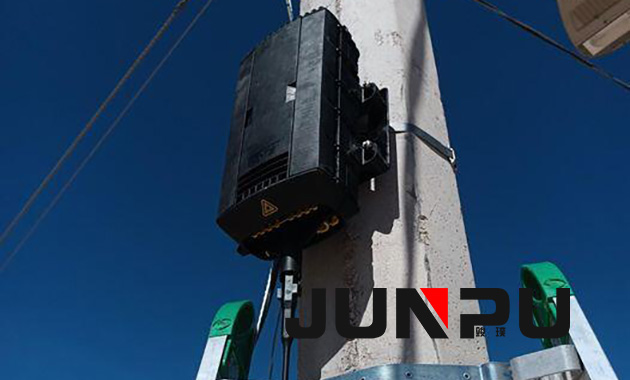
There are wall mounting, pole mounting, and aerial or buried mounting ways to choose from.
The number of inputs and exits of optical cables
Common specifications include 1 oval and 4 rounds, 1*Oval and 6*Round, 2 in 2 out, and 1*Oval and 8*Round. It supports OEM as you require.
Frequently Asked Questions (FAQ)
What is the difference between Dome and Horizontal fiber optic splice closures?
The primary difference lies in their structure and application. Dome (Vertical) closures are cylinder-shaped with all cable ports at the bottom, making them ideal for branching and manhole installations due to their superior sealing against water. Horizontal (Inline) closures are flat or rectangular with ports at both ends, best suited for straight-through (linear) splicing in aerial or underground deployments.
How many cores can a fiber optic splice closure support?
Fiber optic splice closures are designed to accommodate various network scales. Standard capacities include 24, 48, 96, 144, 256, and up to 288 cores. The capacity depends on the number of splice trays installed inside the enclosure. JUNPU Tech provides scalable solutions to meet your specific project requirements.
Are Junpu splice closures IP68 waterproof?
Yes. All JUNPU outdoor fiber optic splice closures are engineered to meet the IP68 standard. This ensures the internal fiber splices are completely protected against dust ingress and long-term immersion in water, making them reliable for harsh outdoor environments, including direct buried and underwater applications.

 English
  日本語
日本語  Deutsch
  italiano
  العربية
  Polska
  Ελλάδα
  română
  slovenský
  Suomi
Suomi  Nederland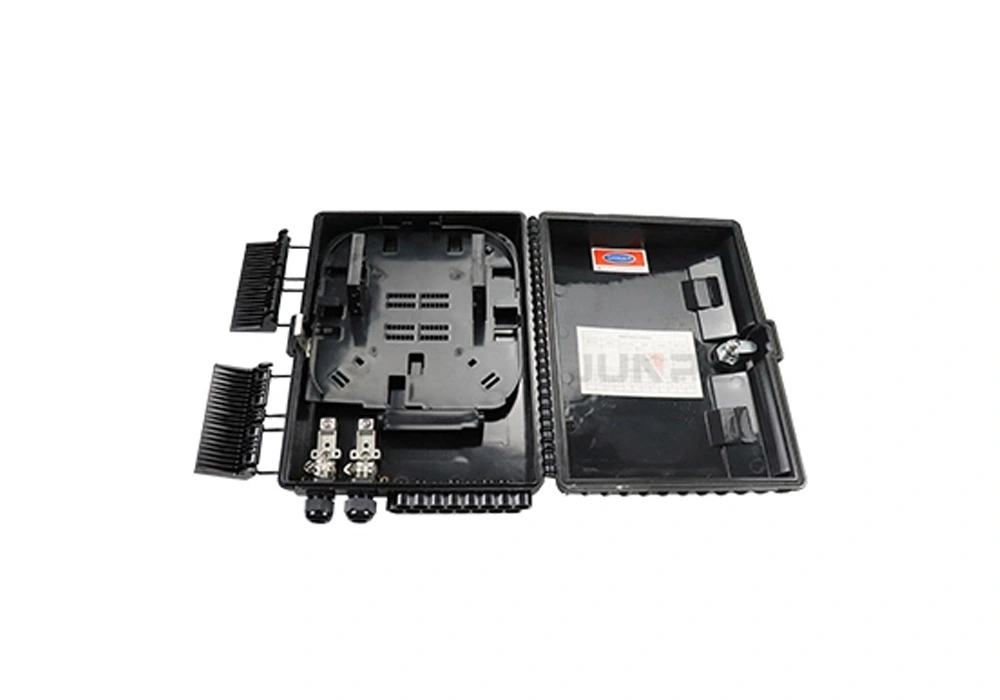







 Call us on:
  Email Us:
  Wanhua Science and Technology Park, No. 528, Shunfeng Road, Donghu Street, Linping District, Hangzhou City, Zhejiang Province