In the fast-paced world of data management, the security and reliability of connectivity within data centers are paramount. As the volume of data processed and stored continues to skyrocket, the demand for robust infrastructure solutions has never been greater. One crucial element playing a pivotal role in maintaining the integrity of data center connectivity is the external fibre splice enclosure.
Ensuring Data Integrity with External Fibre Splice Enclosures
Physical Security Reinforcement
Data centers house an intricate web of fibre optic cables that transmit vast amounts of information. External fibre splice enclosures act as a first line of defense by physically securing the critical points where these cables are joined. This added layer of protection not only prevents accidental damage but also serves as a deterrent against potential security breaches.
Engineering for Extreme Environments: Beyond Physical Security
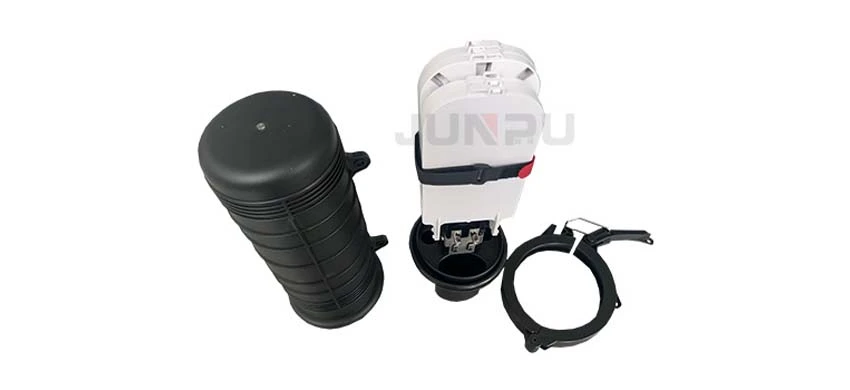
For data centers, an external fibre splice enclosure must meet more than just physical locking requirements. JUNPU enclosures are engineered with IP68-rated sealing technology, ensuring total protection against dust ingress and continuous immersion in water. Utilizing high-strength engineering plastics (PP or PC+ABS), these enclosures provide excellent resistance to UV radiation and chemical corrosion, ensuring a 20+ year lifespan in the harsh outdoor perimeters of massive data campuses.
| Technical Spec | Requirement for Data Centers | JUNPU Solution Advantage |
| Waterproof Rating | IP68 (Continuous Immersion) | Vacuum-sealed mechanical gaskets |
| Material | UV-resistant & Flame-retardant | High-strength PC+ABS (UL94-V0) |
| Re-entry | Tool-less / Mechanical | Rapid-access clips (No heat gun needed) |
| Security | Physical Lock + Tamper Alerts | Specialized security bolts & sensor ports |
Enhanced Reliability in High-Traffic Environments
In the dynamic environment of a data center, network traffic is often at its peak. External fibre splice enclosures play a crucial role in managing and maintaining connectivity, ensuring that the flow of data remains uninterrupted even during periods of heavy usage. This is particularly vital in mission-critical applications where downtime is not an option.
Optimizing Cable Management
The meticulous organization of fibre optic cables is essential for efficient data transmission. Outdoor fiber splice enclosure contributes to optimal cable management, reducing the risk of signal interference and tangling. This not only enhances the overall performance of the data center but also simplifies troubleshooting and maintenance procedures.
Meeting the Challenges of Evolving Data Center Architecture
Scalability and Flexibility
As data centers evolve to meet increasing demands, the flexibility to scale infrastructure is crucial. External fibre splice enclosure provides the necessary scalability, allowing for seamless integration of additional components without compromising on connectivity or security. This adaptability is key in future-proofing data center architectures.
Integrating Advanced Security Protocols
In an era where cybersecurity threats are ever-present, data centers must prioritize the integration of advanced security measures. External fibre splice enclosures can be equipped with encryption technologies and intrusion detection systems, fortifying the network against potential cyber threats and unauthorized access.
In the intricate tapestry of data center operations, external fibre splice enclosures emerge as unsung heroes, ensuring the seamless flow of information while safeguarding against potential disruptions. As data continues to be the lifeblood of countless industries, investing in robust connectivity solutions, such as external fibre splice enclosures, becomes not just a necessity but a strategic imperative for the digital era. These enclosures serve as the backbone of secure and reliable data center connectivity, paving the way for a future where information flows freely, efficiently, and, above all, securely.
Key Factors for Selecting Data Center External Splice Enclosures:
Capacity Scalability: Does it support future expansion from 24 to 144 cores?
Sealing Mechanism: Is it a mechanical seal or heat-shrink seal? (Mechanical is preferred for easier re-entry).
Security Features: Does it support specialized locking bolts or intrusion monitoring sensors?
Material Integrity: Is the housing anti-aging and flame-retardant?
The Criticality of IP68 in Data Center Perimeters: Beyond Standard Protection
In the rigorous infrastructure of modern Tier 3 and Tier 4 data centers, the external fiber perimeter is the most vulnerable link. Data center engineers often overlook that external fiber splice enclosures in these environments face unique, dual-threat stressors: hydrostatic pressure in underground vaults and thermal cycling on rooftops.
Combating Hydrostatic Pressure: Unlike standard outdoor enclosures, JUNPU’s IP68-rated solutions are vacuum-tested to withstand 5 meters of water head pressure. This is crucial for data center campuses located in flood-prone areas or regions with high water tables, where underground manholes can remain submerged for weeks.
Preventing Signal Attenuation (dB Loss): Moisture ingress is a silent killer of high-speed data links. Even microscopic amounts of humidity can lead to moisture-induced micro-bending of the fiber glass. Our enclosures maintain a hermetically sealed internal environment, ensuring zero signal attenuation and maintaining the strict optical power budgets required for 400G and 800G data center interconnects (DCI).
Resistance to Thermal Degradation: Perimeters exposed to prolonged UV radiation and extreme temperatures can cause standard plastics to become brittle. JUNPU utilizes UV-stabilized, flame-retardant PC+ABS (UL94-V0) to ensure the enclosure's structural integrity remains intact for a 20+ year operational lifespan.
Industry Insight: "In a mission-critical data center environment, the cost of a single network outage far exceeds the investment in premium-grade enclosures. Choosing an IP68 mechanicalseal over a standard seal is not just about weatherproofing—it’s about guaranteeing the Long-Term Evolution (LTE) and reliability of the entire optical distribution network."
Expert FAQ: External Fibre Splice Enclosures for Data Center Infrastructure
Why are mechanical seals preferred over heat-shrink seals for data center fibre splice enclosures?
In a fast-paced data center environment, mechanical seals are the preferred choice due to their superior re-entry and maintenance capabilities. Unlike heat-shrink seals, mechanical versions do not require heat guns or specialized tools, allowing technicians to quickly add or re-route fiber paths. This ensure a consistent IP68 waterproof seal is maintained even after multiple openings, providing the operational agility needed for evolving data center architectures.
What is the typical core capacity for these outdoor fiber splice enclosures?
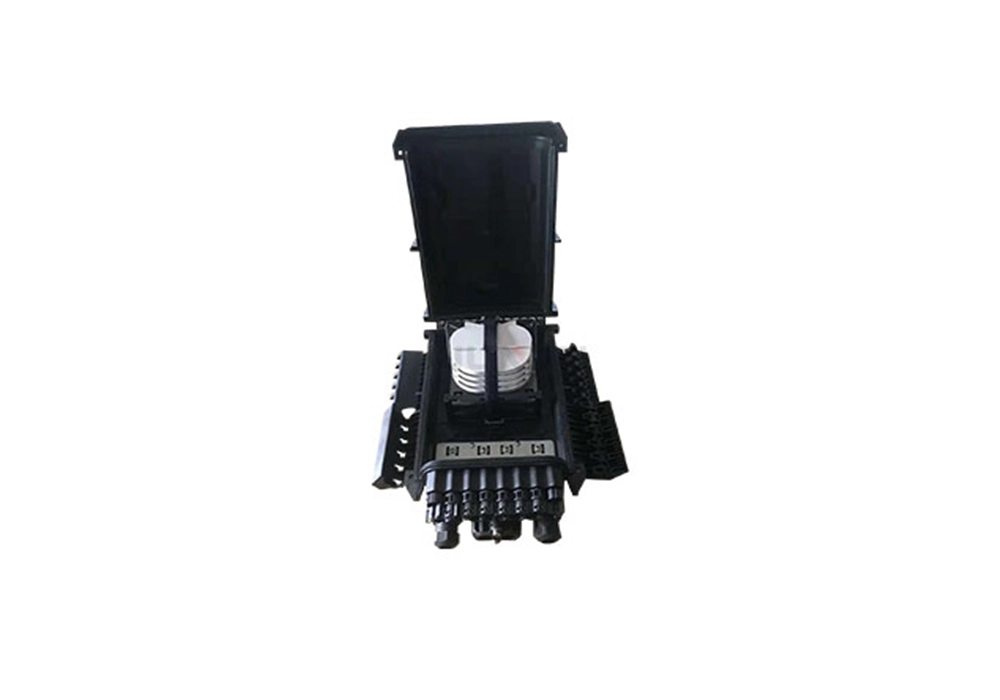
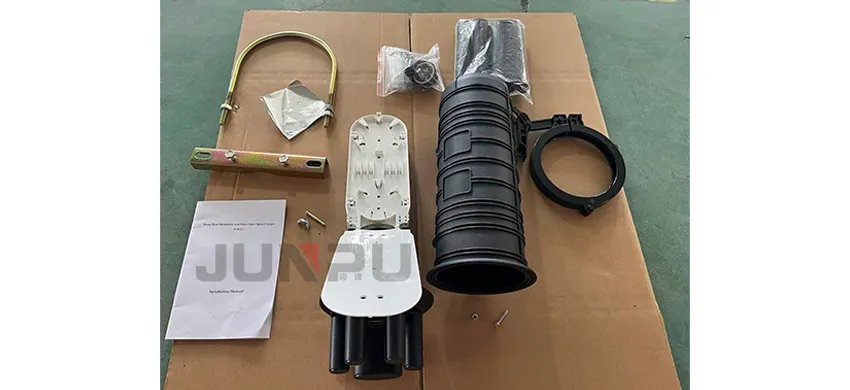
JUNPU provides a versatile range of external fibre splice enclosures with capacities ranging from 12 to 288 cores. For high-density data center backbone links, we typically recommend our dome (vertical) or horizontal (inline) closures. These high-capacity models are designed with multiple cable entry ports to accommodate redundant pathing and high-count ribbon cables, ensuring long-term scalability.
How do these enclosures ensure durability and protect against signal attenuation?
While fiber optic glass is immune to electromagnetic interference (EMI), its physical integrity is vital for signal performance. Our enclosures provide extreme durability by preventing tension, moisture ingress, and vibration—factors that cause micro-bending. By maintaining the precise alignment of fusion splices and securing a stable internal environment, the enclosure ensures the lowest possible decibel (dB) loss across the network link, even in harsh outdoor conditions.
Which splice enclosure types are best suited for data center perimeters?
The choice depends on the installation environment. Dome-type (vertical) enclosures are ideal for underground manholes and pole mounting due to their excellent pressure resistance. Horizontal (inline) enclosures are often preferred for trench or wall-mount applications where space is constrained. Both types from JUNPU feature high-strength PC+ABS housings to ensure resistance against UV radiation and chemical corrosion.

 English
  日本語
日本語  Deutsch
  italiano
  العربية
  Polska
  Ελλάδα
  română
  slovenský
  Suomi
Suomi  Nederland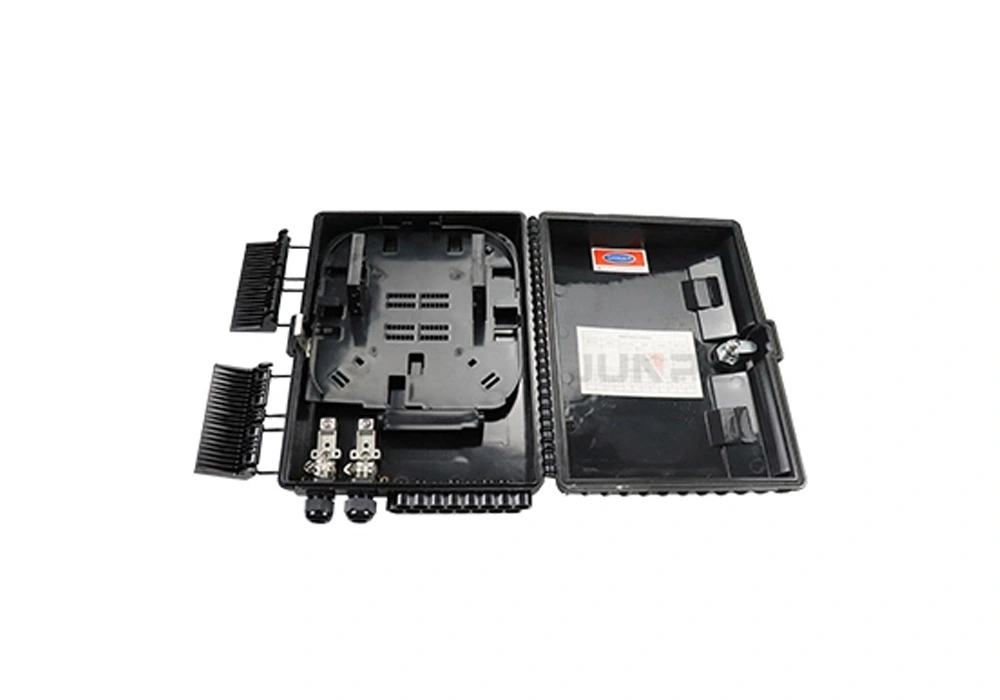



 Call us on:
  Email Us:
  Wanhua Science and Technology Park, No. 528, Shunfeng Road, Donghu Street, Linping District, Hangzhou City, Zhejiang Province