Are you struggling to deliver high-definition live broadcasts, 4K/8K content, or real-time media streams over long distances without signal loss or latency?
In today's fast-paced broadcasting and media industry, the demand for ultra-fast, ultra-reliable data transmission has never been greater. Enter WDM passive optical receivers — a game-changing, power-free technology that leverages wavelength division multiplexing (WDM) to transmit multiple high-bandwidth signals (including CATV at 1550nm alongside data wavelengths) over a single optical fiber.
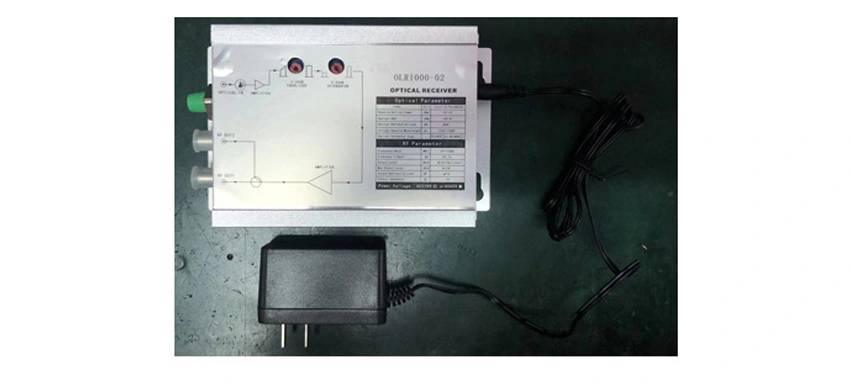
As a leading manufacturer of FTTH and CATV solutions, Junpu's WDM passive optical receivers (also known as mini optical nodes) deliver exceptional signal integrity, zero power consumption at the receiver end, and seamless integration into existing media networks. This breakthrough not only boosts bandwidth capacity dramatically but also simplifies infrastructure, reduces operational costs, and ensures crystal-clear content delivery even in demanding live broadcasting scenarios.
Discover how this innovative passive optical receiver technology is revolutionizing media networks — starting with the critical need for speed in modern broadcasting.
Key Advantages for Media & CATV
| Characteristic | Junpu WDM Passive Receiver | Traditional Active Node |
| Power Supply | No power needed | Requires power |
| Bandwidth | 45-1050MHz+ | Limited |
| Cost | Lower OPEX | Higher |
| Size | Mini compact | Bulky |
The Need for Speed in Media Networks
In the fast-paced world of media and broadcasting, speed is everything. From live streaming events to transmitting high-definition content, the industry demands instantaneous and seamless data transfer. WDM passive optical receivers address this need by leveraging multiple wavelengths to transmit data simultaneously over a single optical fiber, drastically increasing the data capacity and speed of media networks.
Unleashing High-Bandwidth Capabilities
WDM technology enables media networks to unleash unprecedented high-bandwidth capabilities. With the ability to transmit multiple data streams concurrently, broadcasters can deliver a richer and more diverse range of content to their audiences. This not only enhances the viewer experience but also allows media networks to explore new formats and technologies, such as virtual reality and augmented reality broadcasting.
Enhancing Signal Quality and Reliability
Quality and reliability are non-negotiable in broadcasting. WDM passive optical receivers excel in maintaining signal integrity over long distances, ensuring that media networks can deliver content without loss or degradation. This enhancement in signal quality is particularly crucial for live broadcasts, where any interruption can have a significant impact on the viewer experience.
Streamlining Network Infrastructure
Traditional broadcasting infrastructures often involve complex and cumbersome setups. WDM passive optical receivers streamline network infrastructure by consolidating data transmission over a single optical fiber. This not only simplifies the overall network architecture but also reduces maintenance costs and enhances scalability, allowing media networks to adapt to changing technological landscapes with ease.
Future-Proofing Media Networks
The broadcasting industry is constantly evolving, with new technologies and standards emerging regularly. WDM passive optical receiver offers a future-proof solution for media networks by providing the scalability needed to accommodate increasing data demands. This adaptability ensures that broadcasters can stay ahead of the curve and seamlessly integrate new technologies into their workflows.
In conclusion, WDM passive optical receivers are not just a technological upgrade for media networks – they are a revolution. By addressing the need for speed, increasing bandwidth capabilities, enhancing signal quality, streamlining infrastructure, and future-proofing broadcasting systems, WDM technology is propelling the industry into a new era of connectivity and content delivery. As media networks continue to embrace these advancements, viewers can expect an unprecedented level of innovation and quality in their broadcasting experiences.
FAQ: Common Questions About WDM Passive Optical Receivers
1. What is a WDM passive optical receiver?
A WDM passive optical receiver, often referred to as a WDM passive mini node or passive optical receiver WDM, is a compact, power-free device used in fiber optic networks to receive and demultiplex multiple wavelengths (typically 1310nm, 1490nm, and 1550nm for data, voice, and CATV signals) over a single fiber. Unlike active receivers, it doesn't require external power, making it ideal for FTTH deployments and media networks where reliability and low maintenance are key.
In broadcasting, it enables seamless triple-play services (internet, TV, phone) by converting optical signals to RF or electrical outputs without amplification. Junpu's WDM passive optical receivers support high-bandwidth applications like 4K/8K streaming, with features like low insertion loss (<1dB) and wide wavelength compatibility. This technology simplifies infrastructure, reduces costs, and enhances signal integrity over long distances. For more specs, check our mini optical node product page. If you're integrating into a CATV system, contact us for a custom quote.
2. What is the difference between passive and active optical receiver?
The main difference between a passive optical receiver (like a WDM passive mini node) and an active optical receiver lies in power requirements and functionality. A passive optical receiver, such as Junpu's WDM passive optical receiver, operates without electricity at the endpoint—relying solely on incoming optical signals for demultiplexing wavelengths (e.g., 1550nm for CATV). This makes it energy-efficient, cost-effective, and reliable for remote FTTH or media network setups, with no risk of power failures.
In contrast, an active optical receiver uses powered amplifiers (like EDFA) to boost weak signals, suitable for longer hauls but increasing OPEX due to power consumption and maintenance. Passives excel in low-noise environments with typical input ranges of -8dBm to +2dBm, while actives handle lower inputs (-20dBm+). For broadcasting, passives streamline triple-play without complexity. Explore Junpu's range on our EDFA WDM PON page for hybrid solutions. Need help choosing? Reach out to our team.
3. Can WDM passive receiver support XGS-PON?
Yes, a WDM passive receiver can support XGS-PON (10G Symmetric Passive Optical Network) when designed with compatible wavelength coexistence. Junpu's WDM passive optical receivers integrate seamlessly with XGS-PON by handling upstream/downstream wavelengths (1270nm/1577nm for XGS-PON) alongside legacy GPON (1490nm/1310nm) and CATV (1550nm) via passive multiplexing. This enables future-proof upgrades in FTTH networks without replacing infrastructure.
For media networks, this means delivering 10Gbps symmetrical speeds for high-demand applications like live 8K broadcasting or VR streaming, all while maintaining passive, no-power operation at the node. Key benefits include backward compatibility and low latency (<1ms). However, ensure your OLT supports WDM overlays. View our FTTH mini optical node for XGS-PON-ready models. Contact Junpu for compatibility testing or pricing.

 English
  日本語
日本語  Deutsch
  italiano
  العربية
  Polska
  Ελλάδα
  română
  slovenský
  Suomi
Suomi  Nederland






 Call us on:
  Email Us:
  Wanhua Science and Technology Park, No. 528, Shunfeng Road, Donghu Street, Linping District, Hangzhou City, Zhejiang Province